1. The "Ghost Asset" Epidemic in Industrial Financial Statements
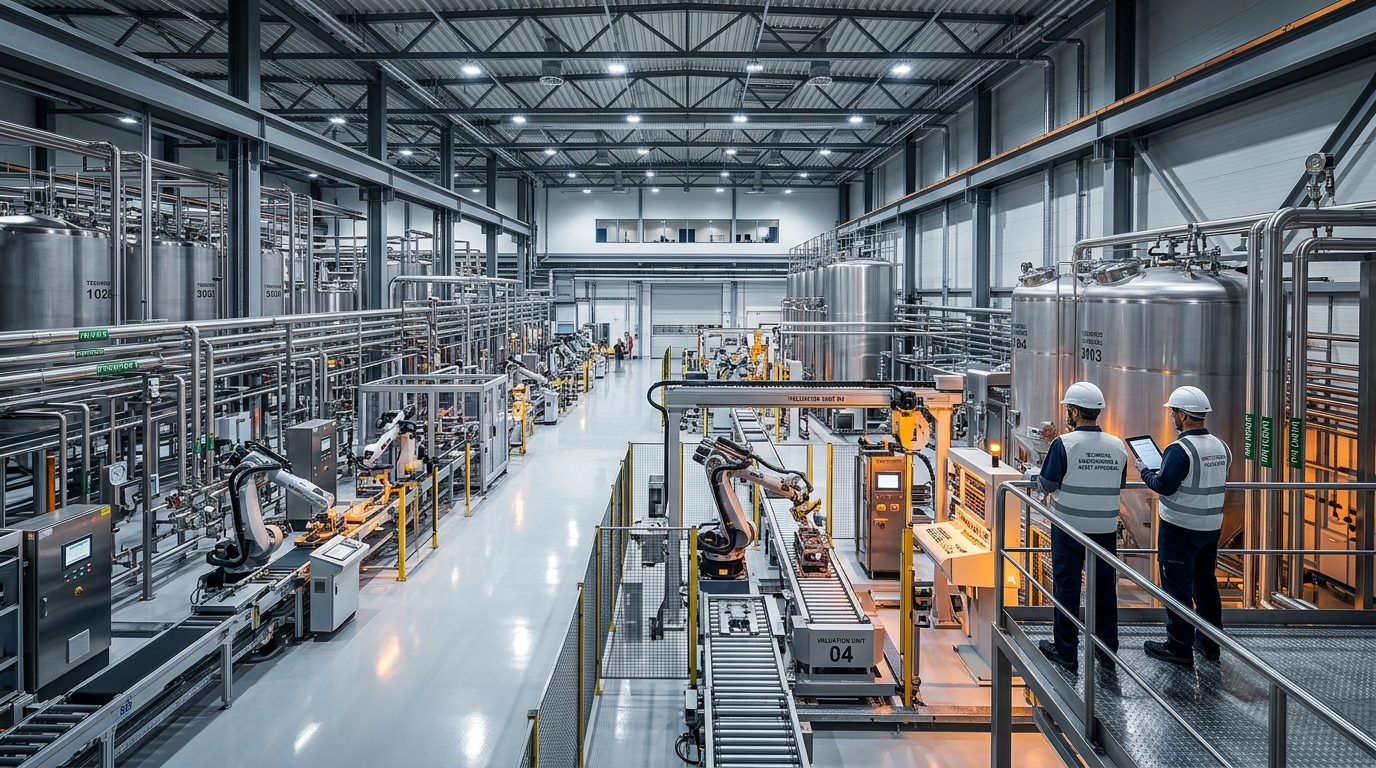
Over decades of facility expansions, machine retooling, and line decommissioning across Itagüí, Guayabal, and Girardota manufacturing plants, corporate accounting subledgers inevitably drift away from operational truth. Companies frequently carry "ghost assets"—scrapped, obsolete, or cannibalized machines that remain on the balance sheet, inflating property insurance premiums and triggering unwanted municipal tax exposures. Conversely, unrecorded capital improvements expensed as maintenance create hidden equity. Under IAS 16 (Property, Plant and Equipment), IAS 36 (Impairment of Assets), and US GAAP ASC 360, audit firms like PwC, Deloitte, EY, and KPMG demand verified physical inventory reconciliations before issuing clean audit opinions.
2. Industrial-Grade Tagging Technology: Barcodes, QR & UHF RFID
Our field deployment protocols utilize physical tagging engineered to survive harsh industrial environments:
- Anodized Aluminum Barcode Plates: For high-temperature equipment, boilers, chemical vessels, and outdoor machinery, we install anodized aluminum tags secured with 3M high-performance acrylic adhesive or mechanical rivets, resistant to UV radiation, hydraulic fluids, and chemical washdowns.
- Tamper-Evident Security Labels: For IT hardware, laboratory instruments, and corporate office assets, we apply destructible vinyl or void-pattern polyester security labels to prevent unauthorized asset transfers.
- Ultra-High Frequency (UHF) RFID Transponders: For high-density logistics assets, returnable shipping containers, and mobile plant tools, we embed passive UHF RFID tags enabling rapid bulk scanning at distances up to 8 meters without line-of-sight requirements.
3. Algorithmic Three-Way Reconciliation Protocol
Our engineering data specialists ingest your fixed asset subledger from SAP S/4HANA, Oracle NetSuite, Microsoft Dynamics 365, or Siesa. Using proprietary fuzzy-logic matching algorithms and manual engineering verification, we cross-reference technical nameplates, serial numbers, models, and cost center assignments, generating an exhaustive audit schedule divided into: (a) Matched Assets with verified physical condition; (b) Unmatched Accounting Assets (recommended for formal write-off and tax deduction before DIAN); and (c) Unmatched Floor Assets (unrecorded equipment requiring capitalization under IAS 16).
4. IAS 16 Componentization and Remaining Useful Life (RUL) Modeling
Rather than applying rigid statutory tax depreciation tables, our licensed valuation engineers evaluate physical wear, operating maintenance logs, and operational duty cycles to calculate realistic engineering Remaining Useful Lives (RUL). Complex equipment is broken down into technical components (e.g., separating an industrial boiler's pressure vessel, refractory lining, burner assembly, and digital SCADA control system), establishing mathematically auditable Fair Values under IFRS 13.